
SEM
In today’s digital world, every business wants to reach more customers and increase its online visibility. Search Engine Marketing (SEM) is one of the most effective digital marketing strategies that helps businesses promote their products and services through search engines like Google and Bing.
When people search for products or services online, they usually look at the first few results. SEM helps businesses display paid advertisements in search engine results pages (SERPs), making it easier for potential customers to discover their websites.
Whether you are a small business owner, entrepreneur, or digital marketer, understanding SEM can help you attract targeted visitors, generate leads, and increase sales.
What Is SEM?
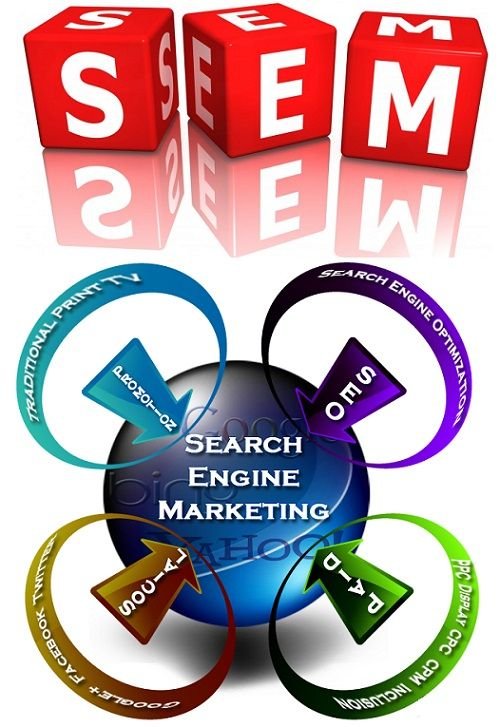
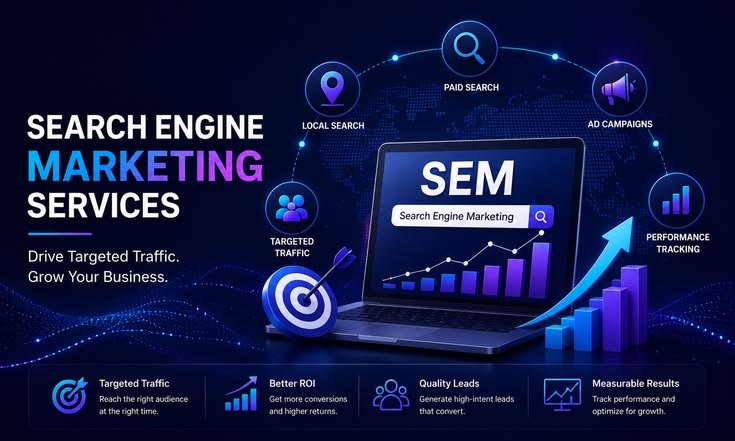
SEM stands for Search Engine Marketing. It is a digital marketing strategy that uses paid advertisements to increase a website’s visibility on search engine results pages.
SEM mainly focuses on paid search advertising, commonly known as Pay-Per-Click (PPC) advertising. Businesses create advertisements based on relevant keywords that potential customers search for on search engines.
For example, when someone searches for digital marketing services near me on Google, paid advertisements from digital marketing agencies may appear at the top of the search results.
SEM SERVICES
Search Engine Marketing works through an advertising auction system. Businesses select relevant keywords and create advertisements to reach people searching for their products or services.
Here are the main steps involved in SEM:
1. Keyword Research
Keyword research is the foundation of a successful SEM campaign. Marketers identify the search terms that potential customers use when looking for products or services.
For example:
Digital marketing services
Best digital marketing agency
SEO services near me
Website development services
Social media marketing services
Choosing relevant keywords helps businesses connect with the right audience.
2. Creating Search Advertisements
After selecting keywords, marketers create attractive advertisements. These ads should include clear headlines, relevant descriptions, and a strong call to action.
For example:
Headline: Best Digital Marketing Services
Description: Grow your business online with professional SEO, Google Ads, and social media marketing services. Contact us today!
3. Setting an Advertising Budget
Businesses decide how much money they want to spend on their advertising campaigns. They can set daily budgets and bidding strategies according to their marketing goals.
4. Ad Auction and Placement
When someone searches for a keyword related to an advertisement, the search engine runs an auction to determine which eligible ads may appear.
Factors such as bid amount, ad quality, relevance, and landing page experience can influence ad placement.
5. Monitoring and Optimization
After launching a campaign, digital marketers monitor its performance. They analyze clicks, impressions, conversions, and advertising costs to improve results.
What Are the Main Types of SEM?
Search Engine Marketing includes different advertising formats that help businesses reach potential customers.
1. Pay-Per-Click Advertising (PPC)
PPC is a popular online advertising model in which advertisers generally pay when someone clicks on their advertisement.
It helps businesses attract targeted visitors and promote their products or services through search engines.
2. Google Search Ads
Google Search Ads are paid advertisements that appear on Google search results pages when people search for relevant keywords.
For example, a customer searching for a jewellery shop may see advertisements from jewellery businesses.
3. Shopping Ads
Shopping Ads display product images, prices, and store information directly in search results. They are particularly useful for e-commerce businesses.
4. Display Advertising
Display advertising uses visual advertisements such as banners and images across websites and apps. It helps businesses increase brand awareness and reach potential customers.
5. Local Search Advertising
Local advertising helps businesses connect with customers searching for nearby products and services.
For example, a customer searching for a digital marketing agency in Mannarkkad may discover relevant local businesses.
How to Create an Effective SEM Strategy
A successful SEM campaign requires proper planning and continuous improvement.
Follow these steps to create an effective SEM strategy:
Set clear goals: Decide whether you want website traffic, phone calls, leads, or sales.
Understand your target audience: Identify the people who are most likely to purchase your products or services.
Research relevant keywords: Select keywords related to your business and customer needs.
Create attractive advertisements: Write clear headlines and descriptions that encourage users to click.
Choose the right landing page: Direct visitors to a page that matches the advertisement.
Set your budget: Decide how much you can comfortably spend on advertising.
Track campaign performance: Monitor clicks, conversions, and cost per conversion.
Optimize regularly: Improve keywords, advertisements, bidding, and landing pages based on campaign data.
FAQ'S
SEM stands for Search Engine Marketing. It is a digital marketing strategy that mainly uses paid search advertisements to increase website visibility and attract potential customers.
The full form of SEM is Search Engine Marketing.
The main purpose of SEM is to increase online visibility, attract targeted visitors, generate leads, and improve sales through search engine advertising.
SEO focuses on improving organic search visibility, while SEM commonly refers to paid search advertising. SEO builds organic visibility over time, whereas SEM can provide faster paid visibility.
Popular SEM tools include Google Ads, Google Keyword Planner, Google Analytics, SEMrush, and Ahrefs.